


Self-leadership Benefits:

By developing your self-leadership, you can:
- Be more efficient and effective
- Increase your productivity
- Reduce stress and increased resilience
- Have Personal Power and Unshakeable Confidence
- Demonstrate Executive Presence
- Live an authentic life

Organizations that adopt and promote a self-leadership culture experience:
- Greater employee engagement
- Effective collaboration and readiness for change
- Increased responsiblitiy and a growth mindset
- Self-leaders who are more motivated, productive, and creative
- Better organizational performance
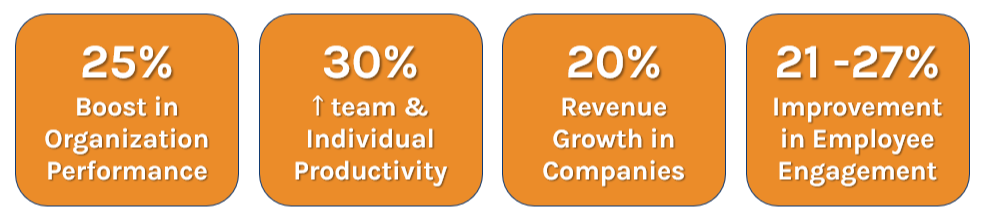
Everyone can practice self-leadership, but not everybody does. The good news is that we can all apply self-leadership strategies and become the best version of ourselves.
The practice of self-leadership involves constantly developing both the 'inner game' (mindset) and the ‘outer game’ (action).
The inner game consists of Intention, Self-awareness, Self-confidence, and Self-efficacy (self-belief) to achieve Personal Mastery, whilst the outer game consists of influence and impact.
Why is Self-leadership so Important?
Self-leadership, also known as Personal Mastery, is the key to developing ourselves to survive and thrive in a Volatile, Uncertain, Complex, and Ambiguous (VUCA) world.
In this current age of AI, individual and organizational learning has become the only sustainable advantage.
Watch this video to hear why you should develop your self-leadership.
"Organizations learn only through individuals who learn. Individual learning does not guarantee organizational learning.
But without it, no organizational learning occurs."
_
Peter Senge
The Founder of Self Leadership International
While many academics (Manz, Houghton, &Neck) have contributed to self-leadership theory, the practical application of self-leadership in organizational contexts has been pioneered by practitioners who bridge research and real-world implementation.
Andrew Bryant founded Self Leadership International in 1999 after a career that began as a physiotherapist working with athletes and evolved into leadership development. His background in human performance, combined with studies in acupuncture, neurolinguistic programming, neurosemantics, and psychology, laid the foundation for his practical self-leadership framework.
Bryant's work came to the attention of Dr. Ana Kazan, a Brazilian researcher who had studied self-management in the United States. Together, they conducted research that resulted in the 2012 McGraw-Hill book that defined self-leadership for a generation of practitioners.
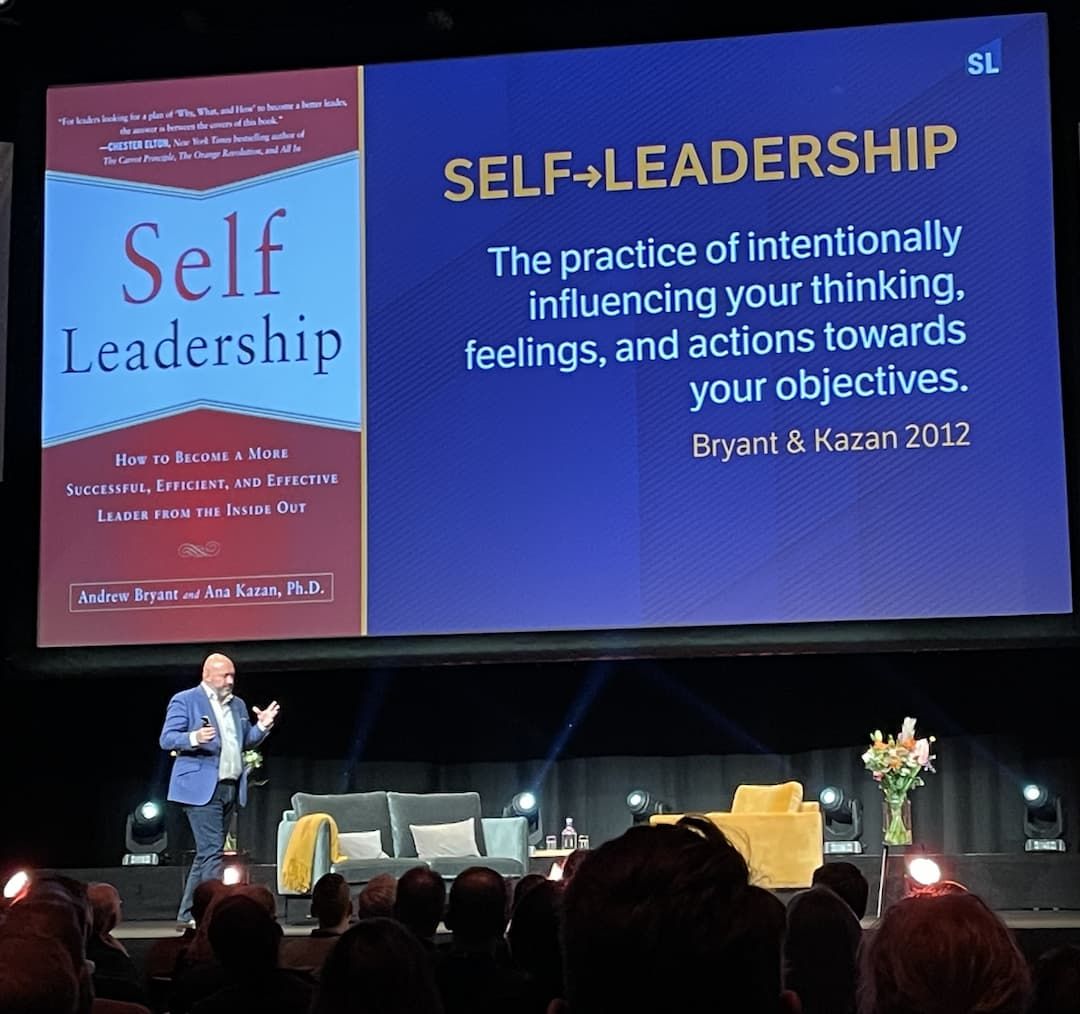
Bryant & Kazan's self-leadership definition, "the practice of intentionally influencing your thinking, feelings, and actions toward your objectives," has become the standard reference point in both academic research and organizational training.
What distinguishes Bryant's approach is its practical applicability. While academic researchers focused on theory development, Bryant spent 25+ years working with executives and leadership teams across 40+ countries, testing and refining what actually works in complex organizational environments.
He's delivered over 500 keynote speeches, coached hundreds of senior executives, and worked with companies ranging from Silicon Valley startups to multinational corporations. His work has been recognized with presidential honors in Singapore for empowering disadvantaged teenagers (2018) and women leaders (2020).
He holds the Certified Speaking Professional (CSP) designation, earned by fewer than 12% of professional speakers globally. He's been featured as a keynote speaker at major conferences such as the HR TECH MENA Conference in Dubai and the People Matters Conference in Mumbai, sharing insights on why self-leadership is essential for human performance in the age of AI.
The academic community has validated Bryant's contribution to the field. His work has been cited in over 150 research papers and Ph.D. dissertations. Academic endorsements of his 2012 book include praise from professors at Ohio State University, North Carolina State University, and other institutions. Dr. Garee W. Earnest of Ohio State University described the work as encompassing "self-reliance, courage, confidence, emotional self-awareness, and perseverance into one leadership concept."
Bryant has also developed psychometric assessment tools to measure the three core competencies of self-leadership: self-awareness, self-learning, and self-regulation. These tools allow organizations to assess current capabilities and track development over time, making self-leadership development measurable rather than aspirational.
Self-leadership Books
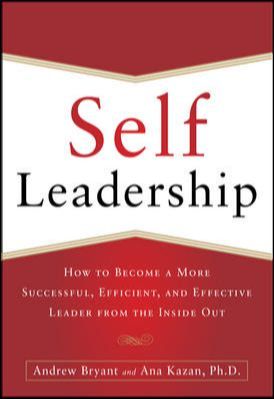
Self Leadership: How to Become a More Successful, Efficient, and Effective Leader from the Inside Out.
(McGraw-Hill 2012, ISBN 978 0071799096).
For leaders looking for a plan of ‘Why, What, and How’ to become a better leader, the answer is between the covers of this book.
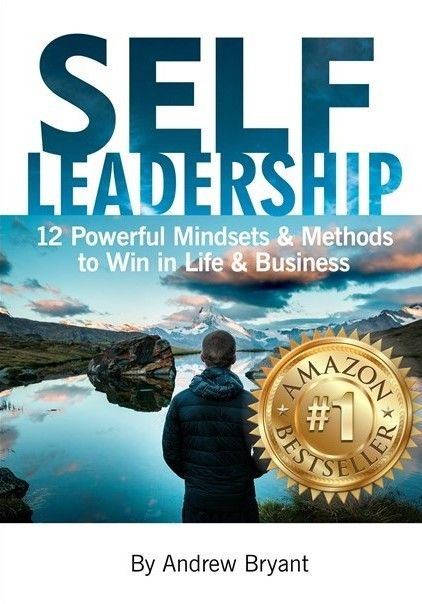
Self Leadership: 12 Powerful Mindsets & Methods to Win in Life & Business.
(SLI 2017, 978-9810994013)
Explore your Self-awareness, expand your Self-Confidence, build your Self-Efficacy, whilst you learn to set your intention for greater influence and impact.
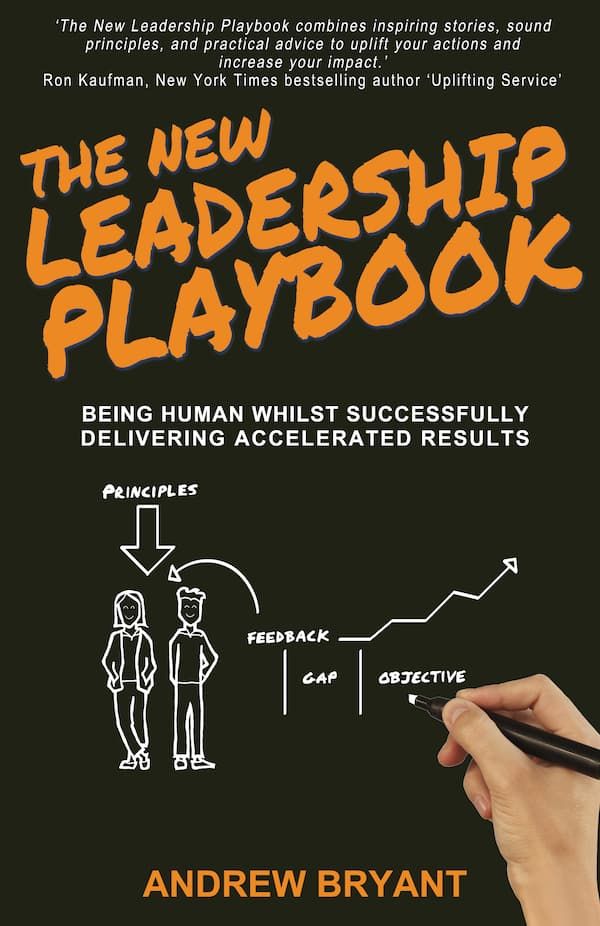
The New Leadership Playbook: Being human whilst successfully delivering accelerated results.
(Ocean Reeve 2022, ISBN 978-1922757005)
A practical leadership guide to being human and understanding people, whilst simultaneously driving for accelerated business results.
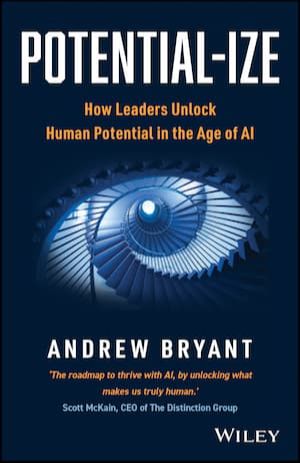
Potential-ize: How Leaders Unlock Human Potential in the Age of AI.
(Wiley, 2026 ISBN 978-1907312922
In his groundbreaking new book, renowned self-leadership expert Andrew Bryant delivers a roadmap to understanding and unleashing human potential in an age of AI.


Self-leadership is the practice of intentionally influencing your thinking, feelings, and actions toward your objectives.
_
Bryant and Kazan (2012)
Charles Manz was the first to use the term 'Self-leadership' in 1983 and defined it as; “a comprehensive self-influence perspective that concerns leading oneself".
Peter Drucker (2010) said that being a Self-leader is to serve as chief, captain, or CEO of one's own life, and Brian Tracy talks about setting a goal and taking full responsibility for that goal.
Andrew Bryant has developed psychometric tools to measure, and therefore develop, the 3-core competencies of self-leadership:
- Self-awareness is the tendency for an individual to focus on and reflect on their own psychological processes and inner experiences as well as their relationships with others.
- Self-learning is the process by which individuals take the initiative, in diagnosing their learning needs, goals, resources, and outcomes.
- Self-regulation is the process of modulating attention, emotion, and behavior to a given situation/stimulus, for the purpose of pursuing a goal.
For example, as you read this page, what is your inner narrative about yourself as a leader?
Have you considered the areas where you need improvement? Are you committed to enhancing your leadership skills?
Self-leadership and The Future of Work
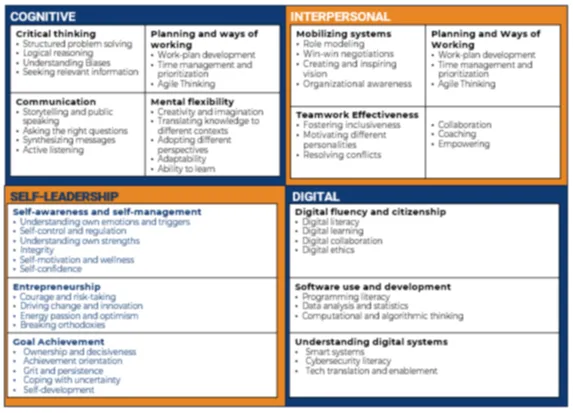
Developing self-leadership has been identified as important for the future of work. Research by the McKinsey Global Institute has examined the types of jobs that will be lost, as well as those that will be created, as automation, AI, and robotics become more prevalent. It has also inferred the type of high-level skills that will become increasingly important as a result.
The research identified 56 Deltas ( a mix of skills and attitudes) across 13 skill groups and four categories. Digital fluency is not a surprise, but self-leadership accounts for 25% of the skills required. Additionally, cognitive and interpersonal skills are enhanced through the practice of self-leadership.
SELF-LEADERSHIP ACCELERATOR
Invest in yourself and transform your life with powerful mindsets and strategies to achieve success in both life and business.

EXECUTIVE PRESENCE
ACCELERATOR
Discover the 6 strategies to stop being overlooked. Feel more confident and start your Senior Leadership Journey.

C-SUITE ACCELERATOR
Find out the traits C-Suite Executives have in common and how to develop them. Not where you want to be in your career? You need to change something.
Self-Leadership in Practice: What It Looks Like
So what does self-leadership actually look like in day-to-day work?
It's the executive who recognizes they're about to react defensively in a meeting, pauses, and chooses a more constructive response instead.
It's the manager who realizes they lack expertise in a critical area, proactively seeks training, and takes responsibility for closing that gap rather than hoping someone else will solve it.
It's the team member who feels overwhelmed by competing priorities, takes time to clarify their objectives, and makes intentional choices about where to focus their energy.
It's the leader who accepts that external circumstances are challenging but refuses to blame others or make excuses, instead asking: what can I control, and what action can I take?
Self-leadership isn't about being perfect. It's about being intentional. It's about accepting reality, adjusting your behavior accordingly, and advancing toward your objectives regardless of circumstances.
Relevant, Resourceful, and the Right Person to go to in this Current Crisis, that’s how I would describe Andrew Bryant."
_
Nick Jonsson, MD EGN Asia

Self-leadership Videos




The effects of self-leadership and mindfulness training on leadership development: a systematic review
Self-leadership and its application to today's leader-A review of literature
failure of today's leader given that the way leaders conduct themselves at the individual level …
Growing the 'I'and the 'We'in transformational leadership: The LEAD, LEARN & GROW Model
approach emerging from practice‐based insights–and describes how the Model was …
Psychology and work: An introduction to industrial and organizational psychology
Industrial and Organizational (IO) Psychology classes. This book makes the core topics of IO …
The mediating effects of self-leadership on perceived entrepreneurial orientation and innovative work behavior in the banking sector
and the roles of entrepreneurial orientation and self-leadership have been important for …
A cross-cultural examination of self-leadership: Testing for measurement invariance across four cultures
confirming a second-order factor structure and testing for measurement invariance in the …
The influence of psychological capital and self-leadership strategies on job embeddedness in the banking industry
sustain and retain skilled employees. Retaining a strongly committed workforce has become …
Self-talk: exploring and validating its dimensions among service sector employees
service sector employees designed to measure dimensions that are relevant for their …